The Devil in the Toybox: How 1980s Evangelicals Linked He-Man, G.I. Joe and the Care Bears to the Occult
SERPENTOR’S LAIR | SPECIAL INVESTIGATION
THEY SAID OUR TOYS WERE EVIL!
The Rainbow, Baphomet and the 1980s Evangelical War on He-Man, G.I. Joe and America’s Toybox
THE COMPLETE 40-YEAR RETROSPECTIVE | OCTOBER 2026
BY ADAM JARED

In the 1980s, a controversial circle of evangelical authors claimed that occult symbolism was entering America’s homes through something parents considered perfectly harmless: children’s toys. The evidence they presented ranged from a rainbow above the Care Bears to a ram’s skull carried by Skeletor.
For millions of American children, the toy aisle represented freedom, adventure and imagination. For a growing number of religious critics, however, those same shelves suggested a spiritual struggle taking place behind the cheerful packaging.
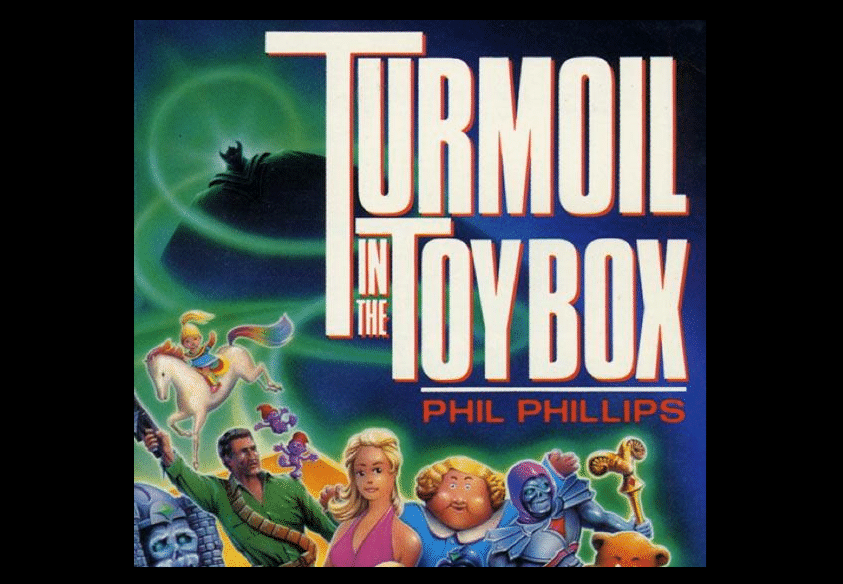
In 1986, evangelist Phil Phillips published Turmoil in the Toy Box through Starburst. His investigation named He-Man, G.I. Joe, Rainbow Brite, the Smurfs, Care Bears, Cabbage Patch Kids, ThunderCats, E.T. and Dungeons & Dragons among the entertainment properties he considered troubling.
Phillips was not merely complaining that cartoons contained too much violence. His underlying allegation was far more serious: that popular entertainment had become a vehicle for concepts associated with witchcraft, Eastern religion, humanism and the growing New Age movement.
And Phillips was not the only evangelical voice expressing alarm.
Christian authors such as Constance Cumbey, Dave Hunt, T. A. McMahon and Jobe Martin were independently raising concerns about New Age philosophy and its relationship to biblical Christianity. Pastor Gary Greenwald joined Phillips in recorded presentations examining toys and cartoons.
The critics did not all make identical arguments, and their conclusions were often contested, including by fellow Christians. Nevertheless, their writings reveal why an apparently innocent rainbow, magical sword or fictional transformation could provoke such intense theological alarm.
THE CENTRAL QUESTION:
Were the toy companies simply drawing from a shared world of fantasy and mythology—or were they popularizing symbols that evangelical critics regarded as part of a competing spiritual worldview?
1. THE RAINBOW: THE SYMBOL THAT CONNECTED EVERYTHING
To understand the evangelical argument, begin with the rainbow.
By the mid-1980s, rainbows appeared throughout children’s entertainment. Rainbow Brite built an entire fantasy universe around them. Care Bears lived above the clouds beneath brightly colored arches. My Little Pony advertising regularly featured rainbows, magical creatures and enchanted landscapes.
But the rainbow also held a significant place in modern esoteric and New Age spirituality.
One of the most important sources of this symbolism was the work of Alice A. Bailey, a writer associated with the Theosophical tradition whose books influenced later New Age teachings.
Bailey’s teachings discussed the antahkarana, sometimes called the Rainbow Bridge: a spiritual bridge of consciousness connecting aspects of the human mind with higher spiritual awareness.
This was not merely a meaning invented by evangelical critics. The Lucis Trust, the organization founded by Alice and Foster Bailey, continues to explain the Rainbow Bridge as a concept within its own spiritual teachings.
Read the Lucis Trust’s own explanation of the Rainbow Bridge.
For conservative Christian critics, the theological problem was direct. Christianity teaches that reconciliation with God comes through Jesus Christ, not through the development of hidden spiritual powers or ascent through esoteric levels of consciousness.
They therefore regarded the Rainbow Bridge concept as more than an innocent metaphor.
CONSTANCE CUMBEY SOUNDED THE ALARM IN 1983
Three years before Turmoil in the Toy Box, attorney and evangelical writer Constance Cumbey published The Hidden Dangers of the Rainbow: The New Age Movement and Our Coming Age of Barbarism.
The title itself was a declaration of how important the rainbow had become in evangelical discussions of New Age spirituality.
Cumbey warned that the movement was drawing upon occult and theosophical religious traditions and that its symbols could become increasingly familiar to unsuspecting Christians.
In her discussion of rainbow symbolism, she connected the image to the Rainbow Bridge, or antahkarana, found in esoteric teachings. She also argued that rainbow decals and merchandise could function as signals of identification among New Age adherents.

Cumbey’s warning was echoed by other evangelical researchers.
In an April 1985 theology thesis titled The New Age Movement, Jobe Ralph Martin identified rainbow imagery, beams of light, pyramids, the third eye and other symbols as elements appearing in New Age publications.
Significantly, Martin specifically mentioned Mattel’s Rainbow Brite toys while discussing how rainbow imagery had become popular in consumer products.
He also connected the colors of the rainbow with teachings about spiritual initiation and different levels of enlightenment.
Read Jobe Martin’s original April 1985 thesis.
Here, finally, was a contemporary explanation for why the same colorful imagery appearing across unrelated toy brands seemed suspicious to some evangelical observers.
They believed the rainbow had become a widely recognized emblem of the New Age movement.
But an important distinction remains: although certain New Age organizations and writers did use the rainbow as a spiritual symbol, there was no single organization controlling the entire New Age movement or an official, exclusively New Age meaning for every rainbow.
The symbol also predates modern New Age spirituality by thousands of years, including its biblical appearance in Genesis 9 as the sign of God’s covenant after the Flood.
That overlap of meanings was central to the controversy.

2. BAPHOMET: THE REAL OCCULT IMAGE BEHIND THE GOAT-HEAD ACCUSATIONS
One of the most important visual comparisons in this entire investigation involves Baphomet.
The famous goat-headed, winged Baphomet illustration was created by French occultist Éliphas Lévi during the nineteenth century and appeared in his work Dogme et Rituel de la Haute Magie.
Its appearance is striking: the head and horns of a goat, wings, a torch between the horns, a pentagram, human features and symbols associated with esoteric philosophy.
Lévi’s illustration represented a complex arrangement of opposing forces and occult concepts. It was not originally designed as a toy-company emblem.
During the twentieth century, related goat-head imagery became strongly associated with Satanism, particularly through the adoption of a goat within an inverted pentagram as the Sigil of Baphomet by the Church of Satan.

Understanding this imagery explains why Phillips reacted so strongly to Skeletor, the villain of Masters of the Universe.
Phillips described visiting a Florida toy store in October 1983 while traveling as an evangelist. The first figure that captured his attention was Skeletor, carrying a staff topped with a ram-like skull.
He associated the staff with occult imagery and purchased the toy to investigate it further.
The weapon in question was Skeletor’s distinctive Havoc Staff, with its horned animal-skull design.
For a child, it signified the evil wizard’s identity. For Phillips, it resembled imagery he associated with satanic or occult practices.
This is where the allegation and the evidence must be separated. Lévi’s Baphomet is a documented occult image. Skeletor’s staff is also a documented fantasy design. Similarity between their animal imagery does not, by itself, establish that Mattel used Baphomet as its design source or intended to promote occult worship.
Nevertheless, the visual resemblance helps explain why the toy became an early focus of Phillips’ campaign.
THE INVERTED PENTAGRAM
The inverted five-pointed star became another central symbol in the controversy.
An upright pentagram has appeared in many religious, magical, mathematical and decorative traditions. Its meaning depends on the historical context.
An inverted pentagram containing a goat’s head, however, became the recognized insignia of the Church of Satan in the late 1960s.

The distinction is important because Phillips and Greenwald sometimes treated stars on cartoon merchandise as potentially occult without demonstrating that the stars carried the same meaning as the actual Sigil of Baphomet.
The emblem was real. Whether a particular toy symbol was intentionally related to it was a separate question.
Read the Church of Satan’s historical account of the Sigil of Baphomet.
3. HE-MAN: THE POWER OF GRAYSKULL VERSUS THE POWER OF GOD
Phillips’ objections to Masters of the Universe extended far beyond Skeletor’s staff.
The franchise was built around a prince who transformed into a powerful champion by raising a magical sword.
Phillips objected to the suggestion that a character could call upon supernatural power through a fictional source other than God.
The phrase “Masters of the Universe” itself became a theological target.
Phillips argued that the title implied a level of supremacy belonging only to God.
In his discussion of the series, he characterized the implication of the characters’ superiority as “blasphemous.”
He also objected to children imitating He-Man’s transformation, raising plastic swords and announcing that they possessed power.
From the evangelical perspective, this concerned the source of spiritual authority. Power obtained through a magical object, secret knowledge or self-assertion could be interpreted as conflicting with biblical teachings that God is the ultimate source of spiritual power.
That concern also mirrored broader evangelical objections to New Age teachings about discovering divine potential within the self.
Phillips therefore interpreted He-Man’s transformation as something more consequential than a fantasy superhero convention.
The argument reached from toy design into Christian theology: who possesses ultimate power, and where does humanity obtain it?
What remains unproven is that Mattel designed the transformation to teach children New Age theology. The similarity was conceptual, not proof of a shared religious mission.
4. RAINBOW BRITE: THE STAR, THE RAINBOW AND THE OCCULT ACCUSATION
Rainbow Brite provided an especially direct visual target because the character’s entire world revolved around rainbow colors, radiant light, stars and magical transformations.
Introduced in 1984, Rainbow Brite became the centerpiece of an extensive merchandise line featuring dolls, animation, accessories and even breakfast cereal.
Critics drew connections between this imagery and New Age teachings about light, color, spiritual energy and expanded consciousness.
In recorded presentations featuring Phillips and Gary Greenwald, Rainbow Brite merchandise was examined as alleged evidence of those connections.
One of the most memorable allegations involved the small five-pointed star displayed on the character’s cheek.
Greenwald interpreted the star’s orientation as an inverted pentagram, connecting it with occult symbolism.
The presenters also described the rainbow as a representation of New Age networking.
From their perspective, the juxtaposition was significant: a rainbow identified with New Age spirituality combined with a star they associated with occult iconography.
There was also an important conceptual objection. Rainbow Brite could manipulate color and light through magical means. Evangelical critics worried that stories presenting supernatural powers as benevolent might blur the distinction between biblical miracles and practices they considered occult.
Yet a decorative star on a fictional character’s face is not automatically equivalent to the Church of Satan’s goat-headed pentagram.
And there is no demonstrated evidence that Rainbow Brite was designed as an initiation into New Age religion.
What is historically demonstrable is that religious critics explicitly interpreted her design within that framework.
5. CARE BEARS: WHY LOVE, FEELINGS AND RAINBOWS BECAME THEOLOGICAL ISSUES
The Care Bears were an unusually revealing target because their outward message was overwhelmingly positive.
The characters promoted kindness, compassion, affection and friendship.
So why did Phillips object?
His criticism centered upon three alleged influences: humanism, magic and Eastern religion.
He believed the series placed too much emphasis on feelings and personal fulfillment as guides for moral decision-making.
To Phillips, that approach could resemble what he understood as secular humanistic psychology, which he associated with the idea that human beings could determine their own destiny independently of God.
He also interpreted the Care Bears’ ability to project supernatural energy from their bodies as a troubling representation of magical or spiritual power.

The famous Care Bear Stare was especially vulnerable to this interpretation.
In the cartoon, the bears could combine their emotional strength and project a powerful beam of energy toward someone in need.
Critics saw potential parallels with concepts of positive energy, spiritual force and emotional power emphasized in some alternative spiritual movements.
Care-a-Lot, the bears’ magical home above the clouds, added another layer of supernatural fantasy.
Phillips argued that the bears took on a role resembling divine or angelic intervention when they solved human problems through their powers.
The theological distinction he drew was between kindness directed by God’s will and spiritual assistance supplied by magical beings.
This criticism went well beyond asking whether the Care Bears taught children to be nice.
It asked what source of ultimate authority the stories presented.
But the allegation of New Age doctrine remained an interpretation. The Care Bears’ fantastical powers and repeated rainbow imagery did not establish deliberate religious recruitment by the franchise’s creators.
6. THE SMURFS: WITCHCRAFT, MAGIC AND THE ALLEGATION OF HIDDEN SPIRITUAL DANGER
The Smurfs became another major target.
Based on characters originally created by Belgian cartoonist Peyo, the American animated series featured magical potions, enchanted objects, supernatural villains and an imaginary woodland community.
Phillips considered the series deeply troubling because magical practices were integrated throughout its fictional universe.
In his account, the apparently harmless characters were disguising a cartoon environment filled with occult material.
Gargamel practiced magic and pursued the Smurfs through elaborate schemes. Other stories featured transformations, magical artifacts and spells.
To parents who believed all representations of sorcery could normalize forbidden spiritual practices, the distinction between good and evil fictional magic was not always reassuring.
Some critics believed that repeated exposure could make children comfortable with the idea that magical practices were ordinary, useful or harmless.
Phillips went further in associated filmed presentations, interpreting the Smurfs’ blue skin and dark lips as reminiscent of corpses.
That allegation became one of the most notorious claims associated with his campaign.
The connection, however, was based on visual interpretation rather than documented evidence of occult intent by the creators.
The Smurfs’ fictional world contained magic, but the existence of magical storytelling did not establish that the characters represented undead beings or were constructed for occult religious instruction.
7. G.I. JOE: VIOLENCE, MARTIAL ARTS AND THE SPIRITUAL QUESTION
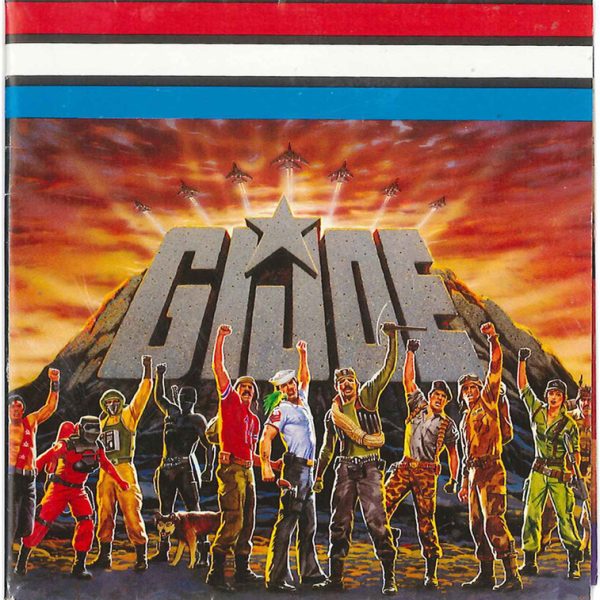
G.I. Joe occupied a different position in the controversy.
Unlike Rainbow Brite or the Care Bears, G.I. Joe did not depend primarily on magical transformations or pastel supernatural imagery.
Its appeal was military adventure: soldiers, intelligence operations, vehicles, weapons and the battle against Cobra.
Phillips criticized the program in connection with violence and occult influences, grouping G.I. Joe among cartoons he regarded as unsuitable for children.
One line of criticism concerned the potentially harmful effects of violent entertainment on children.
The other involved connections that religious critics drew between martial arts and Eastern spiritual traditions.
Martial arts themselves are not a single religious system. Different disciplines developed within different cultural settings, and many are practiced as sports, self-defense or physical training without any religious component.
Nevertheless, some evangelical critics of the era associated Eastern martial disciplines with meditation, mystical energy and religious traditions they considered incompatible with Christianity.
In presentations examining G.I. Joe characters, Phillips and Greenwald raised such concerns alongside objections to aggressive play and toy weaponry.
That argument was especially relevant to characters whose defining expertise involved martial-arts training.
The broader debate over militarized toys had also reached beyond evangelical Christianity. Parents, child-development specialists and media critics were questioning whether toy-centered action cartoons encouraged aggression or simply expanded imaginative play.
For Phillips, these concerns were part of a larger moral and spiritual argument.
But it would be inaccurate to suggest that every G.I. Joe figure carried occult symbolism, or that the franchise’s military imagery was evidence of a hidden New Age agenda.
The documented accusations chiefly concerned violence, perceived spiritual associations of certain martial traditions and the messages children might absorb through play.
8. CABBAGE PATCH KIDS: ADOPTION CEREMONIES AND THE FEAR OF SPIRITUAL ATTACHMENT
The Cabbage Patch Kids phenomenon gave religious critics a very different kind of material to examine.
Unlike ordinary dolls, Cabbage Patch Kids were sold with individual names, birth certificates and adoption papers.
Their fictional origin involved babies being discovered in a magical cabbage patch and subsequently adopted into human families.
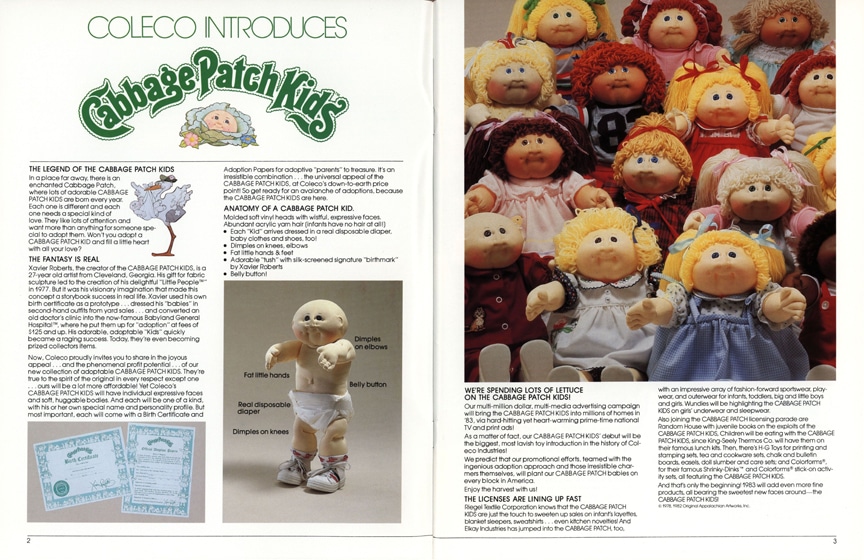
For many parents and children, these details made the dolls more personal than an ordinary toy.
But the combination of an imaginary origin story and a formal adoption ritual became controversial.
Phillips discussed claims involving the company’s method of replacing defective dolls, including the allegation that a replacement could be accompanied by a death certificate.
That claim circulated widely, but it should not be repeated as an established corporate policy without independent documentation.
The surviving 1983 Coleco catalog provides an authentic record of how the dolls were presented: a fantasy about adopting unique imaginary children, complete with documentation that encouraged emotional attachment.
Criticism of the dolls therefore involved concerns about childhood emotional development, consumer manipulation and the meanings attached to the adoption ritual.
Some later religious commentary extended these concerns into allegations about spiritual bonds or objects carrying supernatural influence.
Those additional interpretations must not be confused with proof that Cabbage Patch dolls were designed as occult artifacts.
The important historical fact is that the dolls’ unusual adoption narrative provided religious critics with material that traditional dolls had never offered.
9. MY LITTLE PONY: UNICORNS, PEGASUS AND THE POWER OF THE RAINBOW
My Little Pony brought together several of the symbols that evangelical writers were already discussing: rainbows, unicorns, winged horses and supernatural fantasy.
In Phillips’ interpretation, the mythological origins of unicorns and Pegasus made them spiritually questionable.
He reasoned that the use of mythological creatures introduced children to belief systems and imaginary powers outside biblical teaching.
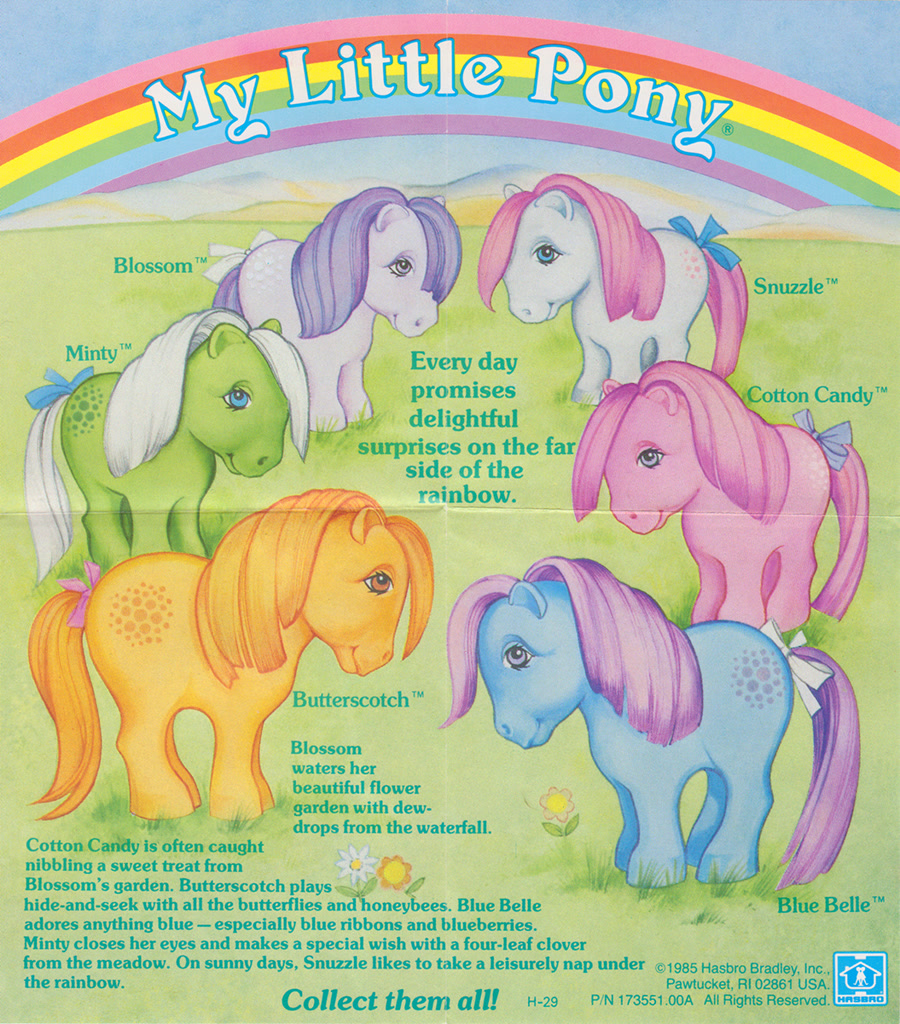
The fantasy adventure Rescue at Midnight Castle also supplied a particularly important example.
Its story involved a threatening creature with horns and goat-like features, magical transformations and an enchanted rainbow used to overcome evil.
Phillips interpreted these elements through the same symbolic framework that shaped his other objections.
A goat-like creature could evoke demonic imagery. A magical rainbow could evoke New Age concepts of spiritual power. A wizard or enchantment could evoke witchcraft.
It was the combination that he considered particularly troubling.
Yet the story itself distinguishes its villain from the heroic characters opposing him.
The fact that a magical rainbow defeats an evil creature does not establish that the production advocated Satanism or New Age initiation.
What it establishes is that the writers drew upon common motifs from fantasy storytelling—motifs that evangelical critics were interpreting through a very different theological lens.
10. THUNDERCATS: THE EYE OF THUNDERA AND SIGHT BEYOND SIGHT
ThunderCats gave critics another universe filled with supernatural images and mythological references.
The Sword of Omens possessed extraordinary powers. Its Eye of Thundera enabled Lion-O to obtain enhanced vision and summon the other ThunderCats.
In the terminology used by the program, the sword granted sight beyond sight.
For critics concerned about New Age spirituality, this kind of fictional ability could resemble concepts of clairvoyance, hidden knowledge or extrasensory perception.
The association was understandable within the symbolic framework of the period, when the third eye and expanded consciousness were prominent subjects of evangelical anti-New Age literature.
However, a resemblance between a fictional magical eye and the spiritual concept of a third eye is not evidence that the show’s creators intended an occult religious lesson.

ThunderCats was named among the franchises examined by Phillips, and presentations associated with the controversy connected its fantastical imagery with broader concerns about occult mythology.
Theologically, the dispute was familiar: could a fantasy hero possess extraordinary spiritual abilities without teaching children to seek those abilities in real life?
11. DUNGEONS & DRAGONS: WHEN IMAGINARY SPELLS WERE TREATED AS REAL MAGIC
Dungeons & Dragons was one of the most controversial entertainment properties of the decade, and it was already the target of a well-established anti-occult campaign before Phillips’ book appeared.
The game included fictional magic, monsters, demons, magical artifacts and spells, all interpreted through rules and dice.
Some evangelical critics feared that familiarity with these elements could encourage experimentation with real occult practices.
Pat Pulling, the founder of Bothered About Dungeons & Dragons, became one of the most prominent voices opposing the game during the 1980s.
Her campaign linked role-playing games with occultism and other alleged dangers to children.
Phillips placed Dungeons & Dragons within his own critique of entertainment that normalized supernatural power outside Christianity.
In filmed presentations with Gary Greenwald, the discussion became particularly sensational, including an anecdote claiming that game objects emitted screams when burned.
There is no credible evidence supporting that supernatural account.
But the underlying theological concern was clear: religious critics feared that children could fail to distinguish fictional spellcasting from practices that their faith expressly prohibited.
Deuteronomy 18 was among the biblical passages invoked in Christian discussions condemning divination and sorcery.
The critical distinction is between a game representing magic within fiction and a player participating in real religious rituals.
Those activities are not the same, even though some critics treated them as potentially connected.
12. E.T., STAR WARS AND THE CONCERN ABOUT A DIFFERENT KIND OF MESSIAH
The debate did not stop with plastic action figures.
Phillips also examined cinematic fantasy and science fiction through his concerns about supernatural power.
In E.T. the Extra-Terrestrial, the alien displays apparent telepathic abilities, can produce extraordinary physical effects and appears to return from death near the conclusion of the story.
Phillips interpreted these scenes through biblical restrictions on occult practices and through the Christian account of resurrection.
His argument was that supernatural powers and resurrection imagery were being associated with a fictional extraterrestrial rather than with God.
Star Wars raised a related objection. The Force, which characters could learn to sense and manipulate, bore perceived similarities to mystical or impersonal spiritual energy.
Phillips connected Yoda’s teaching with Eastern religious concepts and warned that such fictional sources of power might conflict with Christian understandings of spiritual authority.
These concerns overlapped with contemporary evangelical criticism of New Age beliefs about universal consciousness, spiritual energy and enlightenment.
Yet cinematic imagery could carry multiple meanings. A resurrection parallel in E.T. does not automatically prove occult doctrine, just as inspiration from Eastern philosophy in Star Wars does not establish that its viewers are participating in religious worship.
THE PATTERN THE CRITICS BELIEVED THEY SAW
Rainbows signified spiritual transformation. Stars evoked pentagrams. Horned creatures resembled Baphomet. Magical swords represented power apart from God. Psychic abilities suggested clairvoyance. Mythical creatures pointed toward pagan traditions. Together, critics interpreted these recurring elements as evidence of a changing spiritual worldview in children’s culture.
13. THE OTHER EVANGELICAL VOICES: THIS WAS BIGGER THAN ONE BOOK
Phillips’ allegations appeared during a much broader Christian discussion about the New Age movement.
CONSTANCE CUMBEY — THE HIDDEN DANGERS OF THE RAINBOW (1983)
Cumbey argued that New Age beliefs were not simply an assortment of personal spiritual interests but part of a much larger ideological and religious transformation.
Her concern involved the influence of Theosophy, esoteric spirituality and ideas about humanity’s spiritual evolution.
She regarded religious syncretism—the blending of religious traditions into new systems—as a threat to biblical Christianity.
Her book made the rainbow one of the movement’s most recognizable contested images.
DAVE HUNT AND T. A. McMAHON — THE SEDUCTION OF CHRISTIANITY (1985)
In The Seduction of Christianity, Dave Hunt and T. A. McMahon argued that ideas associated with New Age spirituality and the human-potential movement were influencing Christian teaching.
Their central fear concerned doctrines that elevated human spiritual potential, psychological techniques or mystical experiences above the authority of Scripture.
Their warning was not limited to cartoons. They believed the doctrinal consequences extended into churches and Christian ministries themselves.
That context explains why critics such as Phillips considered the imaginary supernatural abilities of cartoon characters worthy of investigation.
JOBE RALPH MARTIN — THE NEW AGE MOVEMENT (1985)
Martin’s April 1985 thesis specifically examined the rainbow, rays of light, the third eye, pyramids, unicorns and other imagery through an evangelical theological framework.
His direct reference to Rainbow Brite is especially significant because it establishes that anxieties about New Age symbolism in children’s products were being articulated before Phillips’ 1986 publication.
He considered the movement an expression of spiritual deception and argued that Christians needed to understand its teachings.
GARY GREENWALD — DECEPTION OF A GENERATION
Pastor Gary Greenwald appeared with Phillips in the video presentations commonly known as Deception of a Generation.
The two presented actual toys and merchandise, identifying alleged occult imagery and making biblical objections to cartoon storylines.
Their presentations offered viewers a concrete visual argument: objects already present in family homes were examined as possible evidence of spiritual influences parents had failed to recognize.
That format was powerful because the audience could see the familiar products while listening to the religious interpretation.
But the interpretation was not proof of design intent, and several of the men’s more extraordinary supernatural claims lacked independent corroboration.
14. EVEN EVANGELICAL SCHOLARS QUESTIONED THE ACCUSATIONS
The evangelical community was not united in endorsing every warning about the New Age movement.
In 1987, Elliot Miller reviewed Cumbey’s books for the Christian Research Journal.
Miller believed aspects of New Age spirituality were genuinely incompatible with Christian doctrine, but he challenged Cumbey’s tendency to portray the movement as a coordinated conspiracy.
He criticized assumptions that inflated the movement’s power or treated loosely related beliefs as evidence of a single organized agenda.
That distinction is important: a theologian can reject a religious teaching while also rejecting unsupported accusations against people, books or commercial products.
Read Elliot Miller’s original 1987 Christian Research Journal review.
In March 1989, Ministry magazine published an evangelical assessment of books about the New Age movement.
Its reviewers recognized the significance of Christian concerns while questioning the reliability of some sweeping interpretations.
The review argued that Cumbey sometimes relied upon fringe figures to characterize an entire spiritual movement, a method that could lead to misleading conclusions.
Read the March 1989 Christian review.
Christian philosopher Norman Geisler likewise emphasized the importance of context when evaluating New Age symbols.
In a 1987 study, he acknowledged that the rainbow, pyramid, unicorn, yin-yang, goat-head pentagram and other images appeared in New Age-associated settings.
But he cautioned that use of a common symbol did not establish that an individual or organization belonged to the New Age movement.
Geisler also pointed out the biblical meaning of the rainbow itself.
This disagreement is crucial to an accurate account of the controversy.
The 1980s evangelical debate was not simply Christians against cartoons. It also involved Christians debating how to distinguish authentic theological danger from exaggerated interpretations of popular culture.
15. THE CULTURAL CONSEQUENCES: WHEN THE TOYBOX BECAME A BATTLEGROUND
For parents who accepted Phillips’ argument, the implications were serious.
There was no reason to tolerate what they believed was an intentional or unintentional introduction of dangerous spiritual concepts to children.
Removing a toy, prohibiting a cartoon or discouraging fantasy games could become an expression of religious responsibility.
For families who did not share those beliefs, the warnings appeared disproportionate to the entertainment being criticized.
Meanwhile, children found themselves caught between adults who interpreted the same objects in radically different ways.
Even today, reader reviews of Phillips’ book include recollections of childhoods affected by restrictions on toys and cartoons.
Those individual memories do not establish the scale of the movement, but they illustrate that the controversy had consequences beyond the publishing industry.
There was also a second historical issue lurking beneath the religious debate: the enormous commercial transformation of children’s entertainment.
By the mid-1980s, toy companies and television producers were building increasingly integrated franchises in which cartoons and merchandise promoted one another.
A 1987 investigation in Multinational Monitor documented how the toy industry had come to dominate substantial portions of children’s television through programs built around marketable characters.
This was a measurable development.
Whether it was wise for corporations to exercise such influence over children’s imaginations was a legitimate question.
Whether those companies were deliberately conducting a secret campaign of occult indoctrination was an entirely different allegation, one that required evidence beyond familiar imagery.
THE FINAL VERDICT: WHAT WAS REAL, WHAT WAS INTERPRETED AND WHAT WAS NEVER PROVEN
Forty years after the publication of Turmoil in the Toy Box, the historical record supports a more complicated story than either complete dismissal or complete acceptance of its allegations.
First, the religious symbolism was real. Baphomet was an established occult figure. The Sigil of Baphomet was a recognized Satanist insignia. New Age and Theosophical writings genuinely employed rainbow imagery, spiritual bridges, inner light and expanded consciousness.
Second, evangelical concern was real. These objections were documented in books, theological writings, sermons and recorded presentations during the 1980s. Critics believed that the spread of spiritual ideas outside Christianity presented a serious theological challenge.
Third, the visual similarities were real. Children encountered rainbows, magical swords, stars, mythological creatures and imaginary psychic abilities across numerous cartoons and toys.
What the evidence did not establish was the most consequential allegation of all: that major toy manufacturers deliberately coordinated the use of these images to initiate children into occult or New Age religion.
That was the leap Phillips and other critics could not demonstrate through symbolism alone.
The same five-pointed star can appear as a decorative motif, a religious symbol or an emblem of an organization, depending upon its context.
The same rainbow can signify a biblical covenant, hope, color, peace, childhood fantasy or spiritual transformation.
And the same fictional sword can represent supernatural evil to one observer and heroic imagination to another.
None of this means that parents in 1986 were forbidden to question what their children watched. It means that a responsible investigation must distinguish what a symbol actually represents in a specific setting from what a critic fears it might represent.
The story of Turmoil in the Toy Box reveals a genuine collision between changing popular culture, deeply held religious convictions and the growing commercial power of the entertainment industry.
For some American families, that collision changed the experience of childhood.
For collectors today, it remains one of the most extraordinary controversies of the 1980s.
THE TOYS WERE REAL.
THE SYMBOLS WERE REAL.
THE FEAR WAS REAL.
But the most explosive accusations surrounding them were never proven.
PRIMARY SOURCES & HISTORICAL REFERENCES
1. Phil Phillips (1986). Turmoil in the Toy Box. Starburst, Lancaster, Pennsylvania. Original 191-page edition.
Library catalog.
2. Constance E. Cumbey (1983). The Hidden Dangers of the Rainbow: The New Age Movement and Our Coming Age of Barbarism. Huntington House.
University of Michigan archival record.
3. Constance E. Cumbey (1985). A Planned Deception: The Staging of a New Age Messiah. Pointe Publishers. Includes a chapter on rainbow and unicorn symbolism.
4. Jobe Ralph Martin (April 1985). The New Age Movement. Master of Theology thesis.
Full text.
5. Dave Hunt and T. A. McMahon (1985). The Seduction of Christianity. Harvest House.
6. Elliot Miller (1987). “Constance Cumbey’s New Age Conspiracy Theory.” Christian Research Journal, volume 10, number 1.
Reprinted review.
7. Ministry Magazine (March 1989). “Christian Responses to the New Age Movement.”
Original article.
8. Alice A. Bailey / Lucis Trust. The Rainbow Bridge and the New Group of World Servers.
Primary esoteric source.
9. Éliphas Lévi (1856). Dogme et Rituel de la Haute Magie. Original Baphomet illustration.
Public-domain illustration.
10. Church of Satan. “The History of the Origin of the Sigil of Baphomet and Its Use in the Church of Satan.”
Historical explanation.
11. Neil Emmett (October 23, 2013). “‘Turmoil in the Toy Box’ Revisited.” Cartoon Brew.
Retrospective analysis.
12. Lorehaven (December 2020). “How Did a 1980s Evangelical Book Warn About ‘Turmoil in the Toy Box’?”
Christian retrospective.
13. Susan Pearson (September 1987). “Babes in the Marketplace: The Toy Industry Takes Over Saturday Morning Cartoons.” Multinational Monitor.
Contemporary reporting.
14. The Strong National Museum of Play. 1983 Coleco catalog and Cabbage Patch Kids history.
Museum collection.
EDITORIAL METHODOLOGY: Historical claims have been distinguished from religious interpretations and independently verifiable facts. Some descriptions of Phillips’ original text and filmed presentations are corroborated by contemporary or later transcriptions and secondary accounts. Symbolic similarity does not establish that a toy manufacturer intended to communicate an occult or New Age religious message. Archival images remain subject to the rights of their respective owners or source archives; the Baphomet illustration by Éliphas Lévi is public domain.
ABOUT THE AUTHOR
ADAM JARED
FOUNDER, SERPENTOR’S LAIR
MASTER OF SCIENCE IN SOCIAL MEDIA MANAGEMENT
PURSUING A Ph.D. IN STRATEGIC COMMUNICATION
Adam Jared is the founder of SerpentorsLair.com, an entertainment and pop culture publication dedicated to preserving the history of classic television, animation, action figures, films and the cultural experiences that defined generations of fans.
Holding a Master of Science in Social Media Management and currently pursuing a Ph.D. in Strategic Communication at Liberty University, Jared combines academic inquiry with a lifelong passion for media history, nostalgia and the social influences of popular entertainment.
His original features and historical investigations examine not only the entertainment that shaped the 1980s and beyond, but also the controversies, creative decisions and cultural movements that influenced how audiences experienced it.